
Review: Love by Love
TRILOGY: A BAND CALLED LOVE PART THREE. Their self-titled debut is both of its time and outside of it.

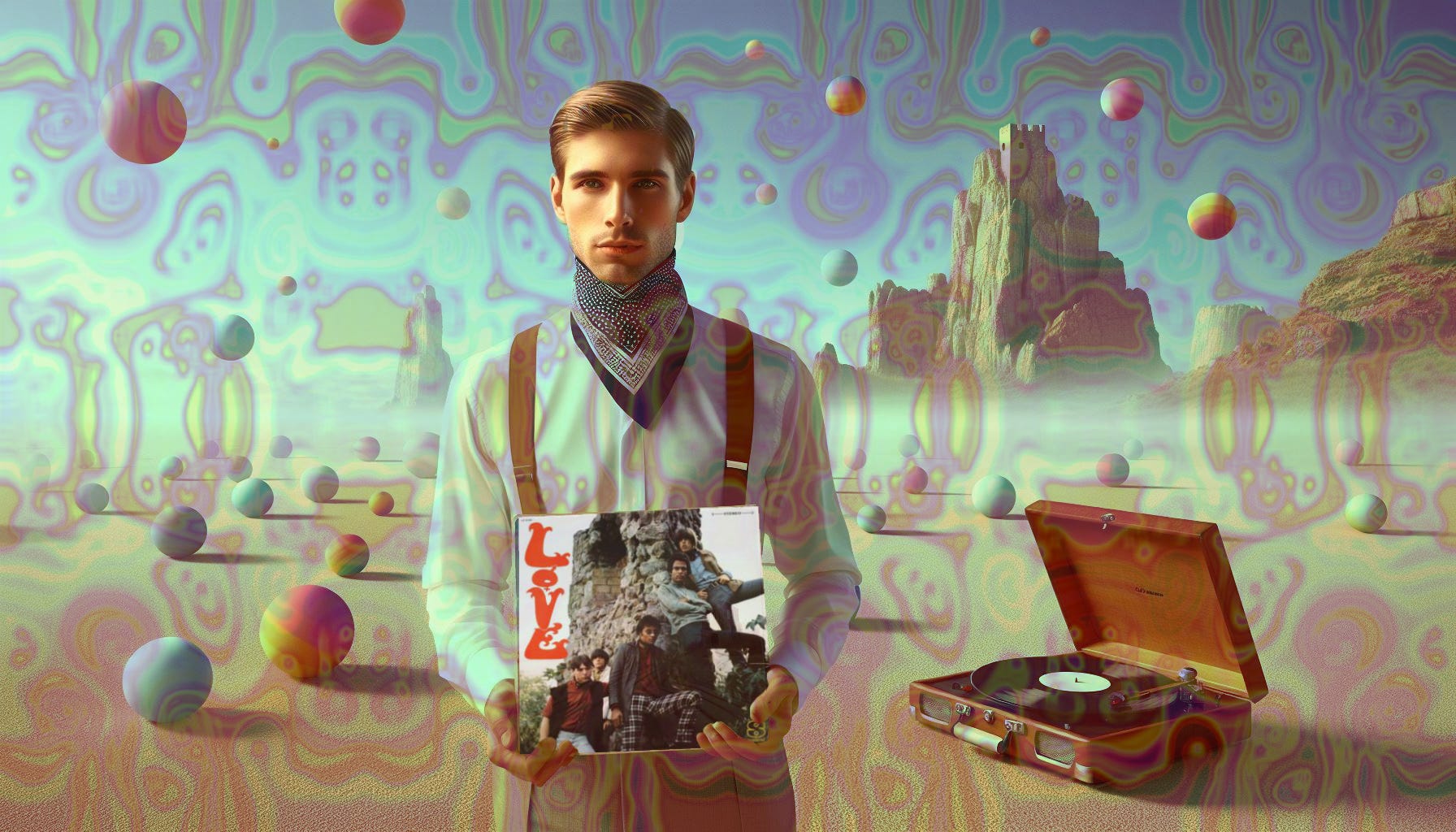
By 1965, seismic shifts were underway in the world of popular music.
The folk scene was beginning to falter, The Beatles were picking up speed, Dylan was going electric and The Byrds achieved a global number one with Dylan’s Mr Tambourine Man. Folk rock was born and the West Coast scene was exploding.
The renowned folk label, Elektra, could see the writing on the wall and the time had come to dip their toes into the world of rock music. Their first signing was Love, with their self-titled debut being the first release.
A multi-racial outfit led by the mercurial Arthur Lee, their debut is typical of many bands at the time. The Jefferson Airplane’s Surrealist Pillow comes to mind. There’s a blend of folk, garage rock and early psychedelia.
While Lee was the clear leader, Bryan McLean, a former roadie with the Byrds, was also a significant contributor as guitarist, singer and songwriter.
The album opens with the Bacharach/David tune My Little Red Book. The melody and rhythm is entirely flattened into a nasty garage rock number, delivered with a biting energy. It’s easy to understand why Bacharach might have disliked it and on the surface, it’s an odd choice, both as a performance and as the first single off the album. Yet, it contains a paradoxical point of view that would become a hallmark of much of Lee’s songwriting. The protagonist has been dumped by his girlfriend and pulls out his book to call up every pretty girl in town. But to no avail, he simply can’t get over her and no amount of pretty girls are going to help.
The original version was recorded by Manfred Mann, presumably in closer resemblance to Bacharach’s wishes, and is inferior to Love’s rendition in almost every respect:
Can’t Explain blends a similar garage rock vibe with a distinct Byrds-like jangle. The first Arthur Lee penned song on the album, in what would become typical, he delves into the ups and downs of personal relationships. Lee can’t explain it and as a statement of purpose, he spends a good deal of his future songwriting trying to find an explanation. What doesn’t need a explanation is that Lee’s vocals and songwriting are emerging as the key driving sonic force within the band.
A Message to Pretty continues the theme with a bluesy folk rock sound, not that far from The Byrds’ rendition of The Bells of Rymney. The lyrics are a different matter, channeling a bleak, downbeat, drug comedown vibe. Heightened yet disintegrating emotions prevail, once again touching on an “I need you” / “I don’t need you” polarity.
My Flash on You returns to the garage rock energy of the opening track. On the one hand, it’s a rudimentary sound yet Lee’s ability to work more complex rhythmic structures into the song through the lyrics and phrasing suggests some Dylan influence while signalling the emergence of Lee’s own distinctive style.
Softly To Me marks Bryan McLean’s first contribution as songwriter and vocalist. It’s the most overtly psychedelic song so far and previews the sounds and structures that will be become more prominent on Love’s next two albums. While the lyrics are at times twee, McLean demonstrates an intriguing and distinct melodic gift.
No Matter What You Do is a more straightforward love song, once again with a Byrdsy sound, not unlike All I Really Want To Do.
Side One closes with Emotions, a spaghetti Western style instrumental that could have been right at home sitting behind Clint Eastwood as he surveyed the wastelands in a Fist Full of Dollars.
You I’ll Be Following opens Side Two and musically it sits nicely at the nexus of folk rock and garage rock with a more psychedelic sound beginning to emerge. Not a love song at all; the person in question who is being followed is clearly Lee’s drug dealer. He makes direct reference to band memeber (Don) Conka, a point that becomes relevant later, as a previous source and overall it’s a rather buoyant ride marred only by the awkward title and chorus.
Gazing again finds us in Byrds/Dylan territory, in this case aping The Chimes of Freedom. Lee attempts some Dylanesque lyrics, even mentioning the Gates of Eden. It’s passable, if perhaps not a little under-developed.
Love tackled the garage rock standard Hey Joe, giving it a hyped up and demented reading which to my tastes is superior to the more famous rendition by The Leaves. It’s entirely different beast to Jimi Hendrix’s version which slows the whole thing down into a self possessed bloodlust that radiates a different kind of menace.
If much of the album feels like the band and Lee grappling for a stylish direction, Signed DC feels like it is pointed to the future more than anything here. The DC in the song title is apparently Don Conka, the band’s original drummer who only appears on a few tracks, having been replaced by Alban “Snoopy” Pfisterer. It savagely interrogates Conka’s drug issues. Stripped to the bone, a haunting blues harmonica floats like a solitary cloud in the Californian desert. A bluesy, acoustic rock, it’s one of the most distinctive tracks on the album which foretells of the paranoid, surrealistic tendencies that Lee will develop further on the coming albums. It’s both poignant and dispassionate, a hallmark of the development of Lee’s songwriting skills.
The underwhelming Colour Balls Falling and And More both suffer from the same problems as Gazing. Not bad songs as such, but they struggle to rise above their derivative origins.
It’s Mushroom Clouds that most clearly lays out the acoustic psychedelia that will be the hallmark of Love’s groundbreaking third album, Forever Changes. Yet the approach is still in its development stage, presenting another short track that doesn’t entirely fill its potential. Only A Message to Pretty breaks the three minute mark.
Love’s debut is crammed with fourteen tracks that reveal Arthur Lee as a talented and original songwriter who nonetheless remains subject to his influences. Love were the first rock band to sign with Elektra and the second would be The Doors, a band that offers a worthwhile comparison.
While it’s easy to draw parallels between Lee and Jim Morrison, Love lacks a distinct instrumentalist of the calibre of either Doors’ keyboardist Ray Manzarek or their guitarist, Robbie Krieger. What’s more, Lee doesn’t radiate Morrison’s photogenic sensuality. Their debut also lacks anything as radio-friendly as Light My Fire.
It is still a remarkably accomplished debut that shows a great deal of promise, promise that will be more fully revealed on their second album, Da Capo, as the overt folk rock influences recede into the background.
This is Part Three of Trilogy: A Band Called Love. You can read Part Two here:
I don't need readers/ I need readers.
Maybe I'll write a poem about it. 😁